
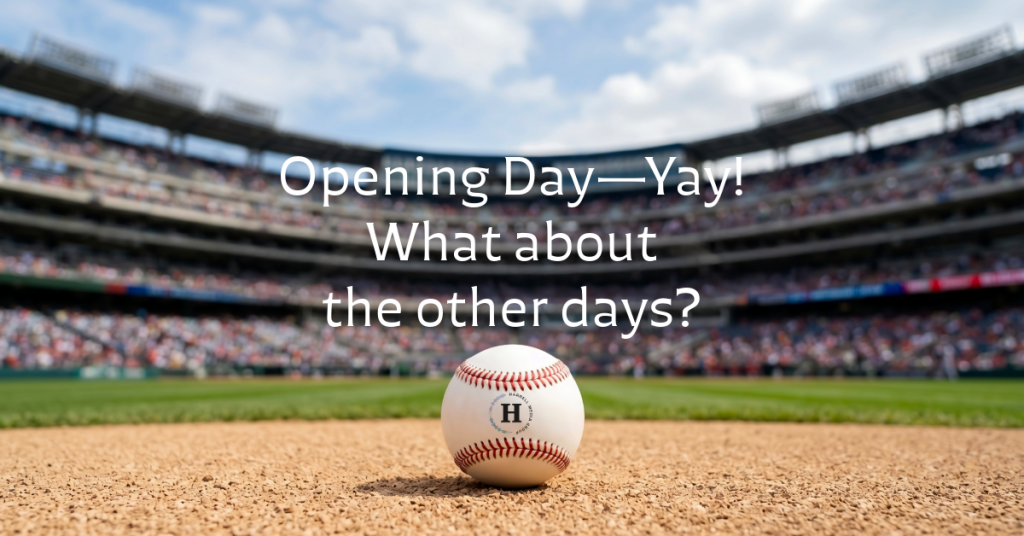
Opening Day. Those two words create mental pictures and transport the baseball fan to a place where memories occupy our bodies for a few seconds every March and early April. It’s the power of the clean slate, and the feeling isn’t limited to America’s pastime.
We experience it during the bracket frenzy of March Madness when a team like Michigan wins its first national title since 1989. It happened over the weekend when Rory McIlroy became only the fourth pro golfer to win back-to-back Masters titles at Augusta National.
For a moment, we’re younger, more hopeful, and more courageous as we plan to celebrate with saturated fat-filled processed food that would make a nutritionist faint… or drop their title for the afternoon.
Illogical Optimism in Sport and Business
Every baseball fan and player thinks their team is going to the World Series when the record is 0-0. We start planning a victory parade if our team wins on Opening Day. If the team loses, well, it’s a long season until October. Both reactions are the reasons we crave illogical optimism.
My experiences through the years included Opening Day festivities in Denver, Detroit, Dallas and Seattle. I wasn’t a traveling fan of the franchises or an experiential fan who wanted to see a game in every stadium. My work in radio broadcasting created access to exclusive sporting, musical and theatrical experiences.
Our brands wanted two benefits from these events: 1) Be in the moment with our community. 2) Let the energy and excitement of the event transfer from our on-air talent and promotional street teams back over the air.
Prior to social media, the on-site, in-the-moment, live feel could only be shared electronically by radio and TV stations. Depending on the time of year, these “work experiences” could be physically uncomfortable. Think about a July 4th event in Dallas or a Winter festival in Detroit. But we walked away from those moments and events feeling the positive effects of human interaction and fandom.
The effects went beyond the on-air breaks. Surrounded by our branded tents, canopies and station vehicles, we smiled, waved, high-fived and had instant conversations with people we would likely never see again.
Content Opportunities and Sales Stories
But there were people we saw every day who would benefit from those experiences—our co-workers. Opening Days, Farewell Tours, and Grand Openings created stories for the workers and the talent to share around the office.
The stories created obvious bonds and connections in the break and conference rooms as the moments were retold and exaggerated. Observant sales reps would hang on to the stories for conversation bait with a client. Observant radio hosts would use the stories for topical content on their morning shows.
We could stop right there. Both strategic benefits mentioned above would be achieved. We were in-the-moment and the experience transferred over the air in multiple ways. Bonus: community was created at the office, and clients knew our brand was on the streets. Nothing else to see here. Move on to the next event.
Groundhog Day Effect on Your Brand
Except, if we stopped there, we’d leave one of the most overlooked opportunities on the table. I call it the Groundhog Day Effect. How do we make customers, clients and fans feel like Bill Murray’s character in the 1993 film about a TV weatherman who kept living the same day over and over?
Obviously, we want them to relive a good experience. It took a few days for Murray’s character to get excited about reliving the same day, starting every morning at 6:00 a.m. when the alarm clock radio started playing “I’ve Got You Babe.” But when he realized the opportunities for renewal, he woke up excited to take on the new day.
Opening Day and Week reintroduces the baseball brand to the fans. Sports seasons are easier to understand and follow because they have a beginning and an end.
What about the brand that’s always there and always on? Your radio station never stops, or it shouldn’t. A grocery store is open every day of the year except a few holidays, and that’s becoming more rare. Most businesses are open 5-7 days per week, year-round. Six days a week for Chick-fil-a…and it’s their pleasure.
How do these brands reintroduce themselves to the fans, customers and audiences?
“At The Car Wash, woah”
My first entrepreneurial experiment was a neighborhood car-wash business. I was nine years old.
It was my first marketing lesson. We made flyers at my dad’s office on the mimeograph machine, an image duplicator used to create newsletters, flyers and bulletins. IBM changed the printing world with the photocopier and removed the thrill of smelling the ink from those Gestetner machines.
The first few weeks of clients included retirees in our neighborhood who were likely moved by the eagerness of a young entrepreneur. It was early GEO-targeting. Or, they knew my parents and bought the car wash service because the favor would be returned by my family when it was time for their kids to sell Girl Scout cookies or Boy Scout Christmas wreaths.
It was my Opening Week. Excitement, clientele, success. Like most experiences for nine-year-olds, the scene changed when school started in the Fall. I don’t recall if the business continued into the next summer. We were enticed by an innovative opportunity: Mowing Lawns. Oh, and we didn’t have venture capital to sustain us beyond our Grand Opening.
Let’s bring this back to your brand today. If our business or service isn’t seasonal, how do we create Opening Day feelings and opportunities year-round? I’ll focus on radio and audio streaming brands, but the principles apply to any business or brand.
The 3-Step Strategy for Year-Round Brand Renewal
Review Your Wins and Losses Immediately
- Opening Week is over. I’m sure there’s a branding team taking a short break and planning for Opening Day in March-April 2027.
- Review your wins and losses soon after the event, feature or sale is over. You’ll be more transparent with the potential for improvement than if you wait six months to review it. Do you play Christmas music on your radio station? Start planning your strategy for next year’s playlist, promotion and events by February 1st.
- “We learned some hard lessons last year,” said coach Cori Close about her UCLA team winning Sunday’s NCAA Women’s Basketball National title. “And when we got to the Final Four, and we weren’t ready,” she said in a CBS Mornings interview. “It inspired a ‘what will it take from the inside out’ to be ready a second time around.”
- Review it for your audience and clientele. This is easier with contesting. If you’re giving away a trip to a Disney park or a concert at the Sphere in Las Vegas, you promote it heavily leading up to contest time. You promote it heavily during the contest window. But then, it tends to drop off after the winner is announced. That’s a missed branding opportunity. Promote it heavily after it’s over to position your brand as the station that gives away lifetime experiences.
- If the networks are smart, they’re using Opening Week, Super Bowl and Olympics footage after the games to position themselves with those events.
- There’s one other reason you keep promoting: it’s great ear and eye candy for the audience.
Review Your Wins and Losses Immediately
- Does the audience and clientele understand your brand’s purpose? ESPN, Fox Sports, MLB Network and Westwood One don’t assume I’ll be emotionally motivated by the Opening Week of baseball. They spend weeks and months promoting the start of the season with passionate audio and video.
- Radio brands: The change from diary-based audience measurement to electronic measurement via the Personal People Meter taught us something we already knew: The audience was listening to more stations than they were writing down in the diary. Think about how much more noise and distraction there is for the content consumer 17 years after the PPM device was introduced.
- Reacquainting the audience with your purpose, your mission, and your difference isn’t a task. It’s part of the daily and hourly DNA of your brand.
Reacquaint the Audience with Your Purpose
- The news cycle of the last few years has been exhausting because we have too many ways to consume content. Everything is “breaking news.” Everything is dramatic. The cycle moves so much faster, and consumer burnout is real.
- Opening Day and March Madness work because every team is 0-0. Hope is renewed for a moment. How can your brand offer a clean slate to the customer? Maybe it has nothing to do with transactions, but a simple experience.
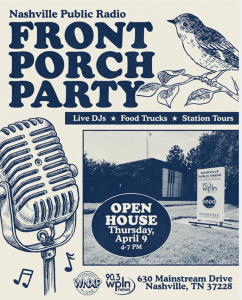
- Recently, Nashville NPR affiliate WPLN created the Front Porch Party for listeners to come by the station, meet the announcers and staff, and get a tour of the facilities. An Open House isn’t a new concept, but it’s unique in 2026 as society yearns for human interaction and transparency from our favorite brands and influencers.
“Roger that, Houston”
Last week’s splashdown of the NASA Artemis II space capsule gave the world a break from the exhausting news cycle. Just like Opening Day, we’re all on the same team for a moment. It’s a good feeling.
Your brand may not be sending humans on a trip around the moon. But your dry cleaners, car wash, grocery store or radio station can constantly create appreciative, fulfilling and hopeful feelings, or fun feelings and experiences by renewing your brand’s attributes every day.
The Three Steps PDF
Here’s an evergreen downloadable PDF review

 English